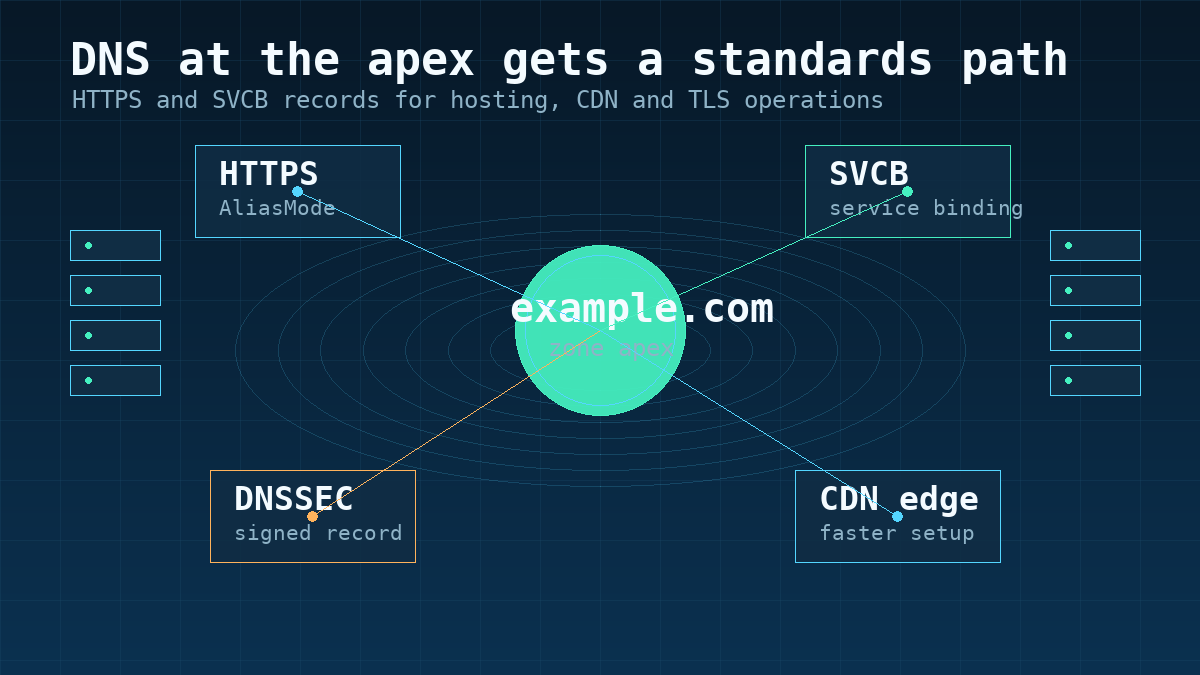
GoDaddy is pointing site operators toward HTTPS and SVCB DNS records as the standards-based replacement for older CNAME-flattening workarounds at the root of a domain.
The company’s new engineering post focuses on a long-running hosting problem: the DNS rules do not allow a CNAME at the zone apex because the same name must also carry records such as SOA and NS. That has pushed many domain owners, CDNs and SaaS platforms toward provider-specific ALIAS, ANAME or “CNAME flattening” features when they want example.com to point at infrastructure identified by a hostname rather than a fixed IP address.
GoDaddy says RFC 9460’s SVCB and HTTPS record types now provide a cleaner path. In AliasMode, an HTTPS record can give apex names CNAME-like behavior while remaining a real DNS record in the zone. The distinction matters for operators that care about portability, predictable TTL behavior and DNSSEC validation.
The post also frames the change as a performance and security upgrade, not just a syntactic cleanup. HTTPS records can carry service parameters used by modern clients, including HTTP/3 signaling and IP hints that may avoid follow-up address lookups. GoDaddy also argues that the records fit naturally with pre-signed DNSSEC zones because the values can be signed ahead of time rather than synthesized dynamically at query time.
For hosting customers, the practical takeaway is to separate two common use cases. If the root domain must connect directly to a CDN, load balancer or hosted application endpoint, GoDaddy recommends looking at HTTPS records where the target platform supports them. If the goal is simply to send visitors from the bare domain to www or another URL, an HTTP-layer redirect remains the simpler and more explicit answer.
The broader signal is that apex aliasing is moving from proprietary DNS-provider behavior toward a web-platform standard that registrars, DNS hosts, CDNs and browsers can implement consistently. That should be especially relevant for managed DNS customers, SaaS onboarding flows and hosting platforms that still instruct users to choose between root-domain convenience and standards-compliant DNS.