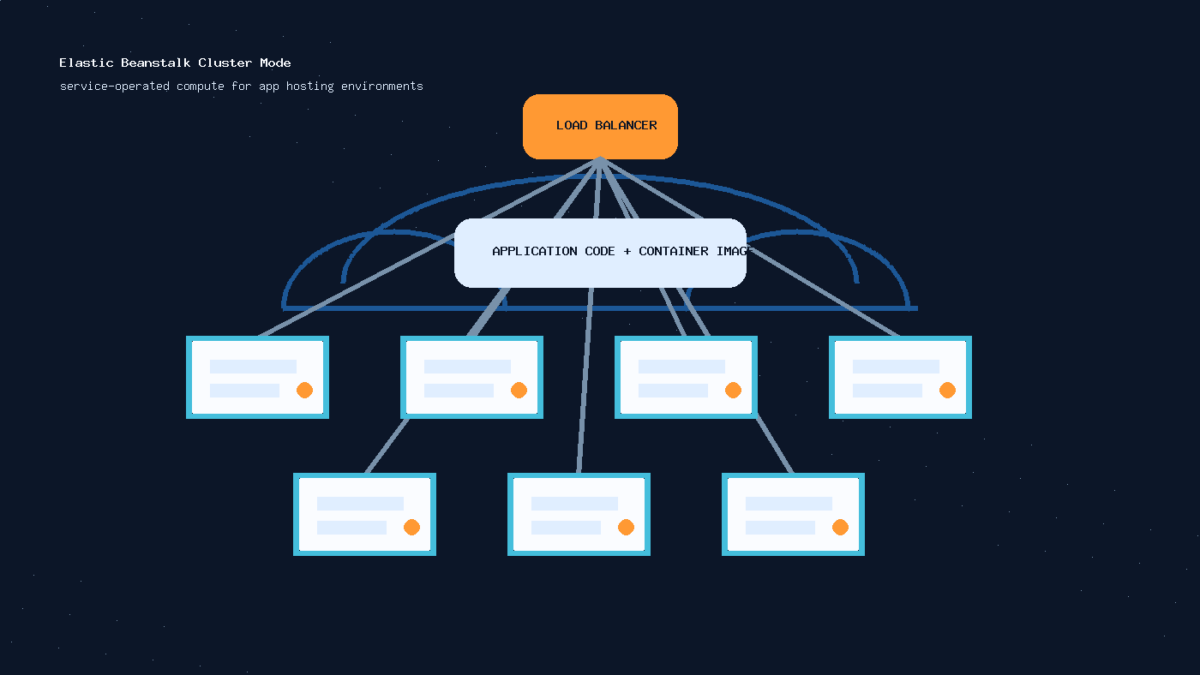
AWS has added Cluster Mode to Elastic Beanstalk, giving application teams a way to run Beanstalk environments without directly provisioning or operating the underlying compute.
The AWS News Blog describes the new mode as a service-operated compute option: operators provide application source code or a container image, and Elastic Beanstalk creates and runs the environment underneath it. For smaller hosting teams and agencies, that is the meaningful part of the announcement: Beanstalk is moving closer to a managed application-hosting lane rather than the traditional model where teams still spend time tuning and replacing the backing instances.
Elastic Beanstalk has long sat between do-it-yourself infrastructure and fully abstracted platform hosting. Cluster Mode narrows that gap for sites and web applications that want AWS deployment workflows while handing off more of the compute lifecycle to the platform.
Why it matters for site operators
- Less instance babysitting: AWS says the mode removes the need to provision or operate the compute layer directly.
- Container and source-code paths: teams can bring either a container image or source bundle, which fits common agency and SaaS deployment pipelines.
- Managed-platform positioning: the update makes Beanstalk more competitive with app-hosting platforms that emphasize deployment simplicity over infrastructure assembly.
The practical question for hosting providers and consultants is whether Cluster Mode becomes a simpler default for moderate-traffic applications that do not need bespoke EC2 architecture. Teams should still review pricing, scaling behavior, logging, rollback procedures, and regional availability before moving production workloads.
Source: AWS News Blog — “AWS Elastic Beanstalk introduces Cluster Mode”.